
When comparing massage vs stretching, many people wonder which one actually releases tight muscles for good
You know the feeling. Your shoulders are up around your ears. Your lower back is tight. Your hamstrings feel like steel cables. You’ve tried stretching. You’ve tried foam rolling. You’ve tried just ignoring it and hoping it goes away.
But the tension persists. And you’re left wondering: what am I doing wrong?
At Gard Wellness Center in Cary, we hear this question constantly. Patients come in frustrated, convinced they’ve tried everything, convinced their tight muscles are just something they have to live with.
The truth is, they’ve been using the right tools—just not always in the right way. Massage and stretching both have their place. But they do different things, and knowing when to use each can make all the difference.
Here’s what you need to know.
Massage vs. Stretching: Why Some Tightness Won’t Go Away
Before we talk about solutions, we need to understand the problem. Not all tightness is the same.
Acute Tightness vs. Chronic Tightness
Acute tightness is what you feel after a hard workout or a day of unusual activity. Your muscles are fatigued, maybe a little sore. They’ll loosen up with rest, gentle movement, and some stretching. This type of tightness is temporary and responds well to self-care.
Chronic tightness is different. It’s the tightness that’s been there for weeks, months, or years. It doesn’t respond to stretching the way acute tightness does. It might feel better temporarily, but it always comes back.
This chronic tightness often comes from adhesions—microscopic scar tissue that forms when muscles are injured, overused, or held in poor posture for long periods. Adhesions bind up muscle fibers, restrict blood flow, and create tension that no amount of stretching can fully release.
The Adhesion Problem
Think of healthy muscle tissue like a bundle of straws. They slide past each other easily, allowing the muscle to contract and lengthen smoothly.
Now picture those straws stuck together with glue in spots. That’s an adhesion. The straws can’t slide properly. The muscle can’t move through its full range. And when you try to stretch it, you’re pulling against those glued spots, creating tension and sometimes pain.
Stretching can’t un-glue those spots. It can only pull on them. To release adhesions, you need something that applies targeted pressure to the specific stuck points—something like therapeutic massage.
Learn more about therapeutic massage at Gard Wellness Gard massage page.
External Link: The American Massage Therapy Association provides research on soft tissue techniques.
What Stretching Does (And Doesn’t Do)
Stretching is a valuable tool. But like any tool, it has specific uses.
What Stretching Does Well
Stretching is excellent for:
Maintaining flexibility you already have
Warming up before activity
Cooling down after activity
Relieving mild, acute tightness
Improving circulation to muscles
Reducing stress through gentle movement
When done regularly and correctly, stretching helps keep your muscles long and limber. It’s a crucial part of any wellness routine.
What Stretching Can’t Do
Where stretching falls short:
Can’t break up adhesions (scar tissue requires targeted pressure)
Can’t release trigger points (tight knots that refer pain)
Can’t address deeper tissue restrictions (fascia, tendons)
Can’t correct chronic postural patterns without other interventions
If you’ve been stretching a tight area for weeks with no lasting relief, you’re not failing. You’re using the wrong tool for the job.
The Risk of Over-Stretching
There’s also such a thing as too much stretching. Over-stretching can:
Create micro-tears in already irritated tissue
Strain supporting structures
Trigger protective muscle spasms (making tightness worse)
Mask the underlying problem without solving it
If stretching isn’t working, pushing harder isn’t the answer.
–The National Academy of Sports Medicine offers guidance on proper stretching techniques.
What Massage Does (And How It’s Different)
Therapeutic massage isn’t just about relaxation. When done with intention, it’s a medical intervention that changes tissue.
Breaking Up Adhesions
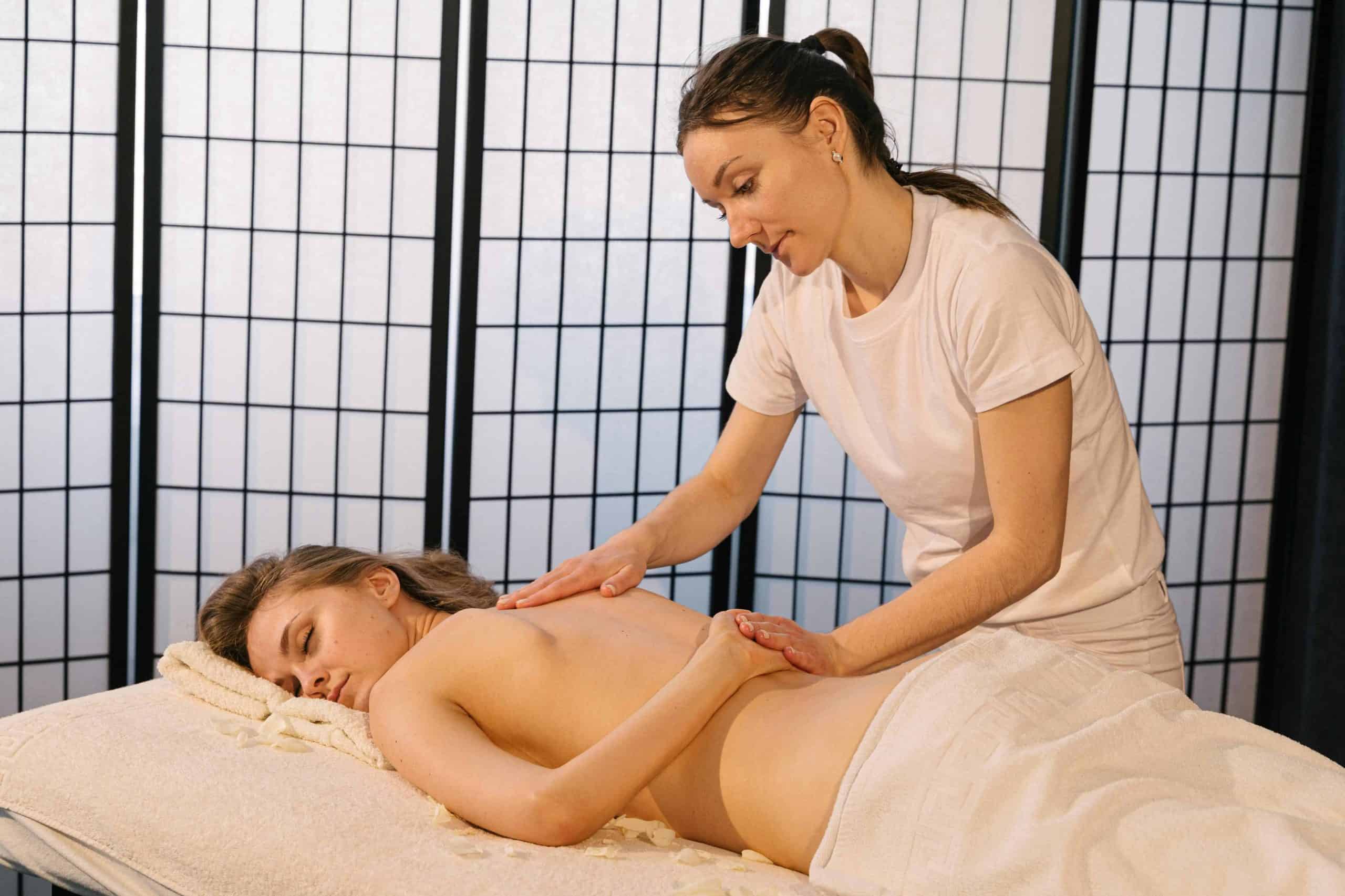
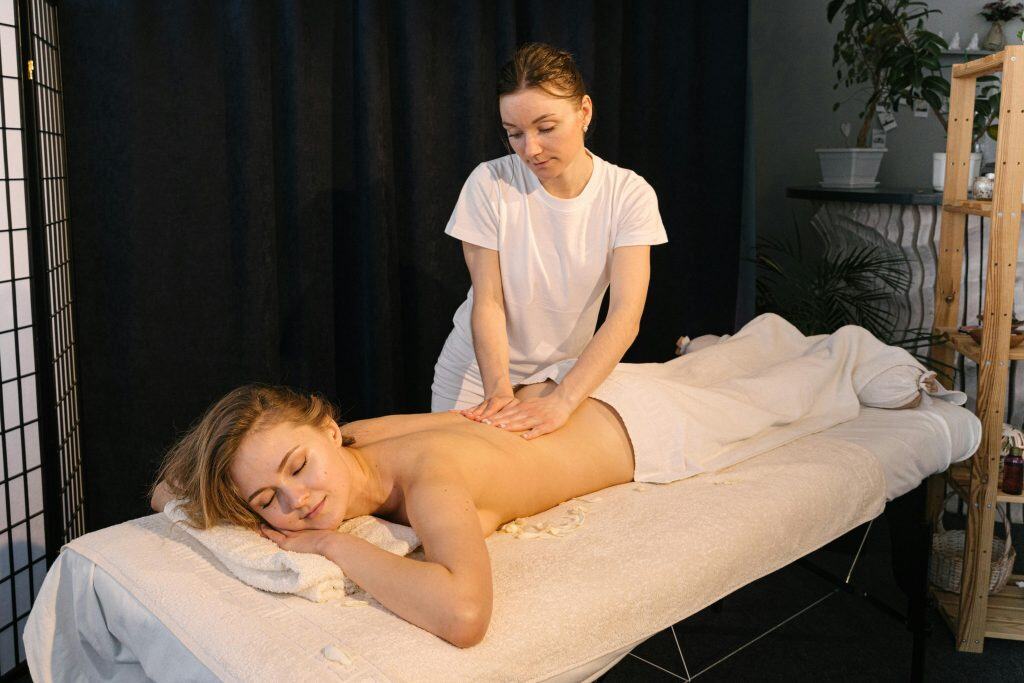
Massage therapists trained in therapeutic techniques can identify adhesions by feel. They use targeted pressure, often moving across the grain of the muscle, to physically break up scar tissue and restore normal tissue glide.
This is something stretching simply can’t do. No amount of pulling on a muscle will un-glue the stuck fibers inside it.
Releasing Trigger Points
Trigger points are tight knots in muscle tissue that can refer pain to other areas. A knot in your upper trap might send pain up into your head, causing a tension headache. A knot in your glute might mimic sciatica.
Massage therapists can locate trigger points and apply sustained pressure to release them. When a trigger point releases, patients often feel an immediate decrease in tension and sometimes a sense of warmth or spreading relaxation.
Improving Circulation and Lymphatic Flow
Massage physically moves fluids through tissues. This brings fresh oxygen and nutrients to tight areas while carrying away metabolic waste. The result is reduced inflammation and faster healing.
Calming the Nervous System
Chronic tightness is often driven by a nervous system stuck in “fight or flight.” Massage stimulates the parasympathetic nervous system—the “rest and digest” mode—signaling your body that it’s safe to relax. This is why massage doesn’t just feel good; it creates lasting physiological change.
Meet the massage therapists at Gard Wellness Gard team page.
Why Combining Both Creates Lasting Results
Stretching and massage aren’t competitors. They’re partners.
The One-Two Punch
The most effective approach follows a simple sequence:
Massage first to release adhesions, trigger points, and fascial restrictions
Stretch after to maintain the new range of motion and reinforce the release
When you stretch without first releasing adhesions, you’re pulling against the stuck spots. When you massage without following up with stretching, the tissue can tighten back up.
How It Works at Gard Wellness Center
At Gard, massage therapists work directly with the chiropractors. When you come in for care, your massage therapist knows what areas the doctors have identified as problematic. The massage session targets those specific restrictions. Then, with the tissue released, chiropractic adjustments can be more effective, and your home stretching program actually works.
The Maintenance Phase
Once you’ve gotten relief, the combination shifts. You might need massage less frequently—maybe once a month for maintenance. Stretching becomes your daily tool for keeping the tissue healthy. And your chiropractor continues to monitor your alignment.
Explore integrated care at Gard Wellness Gard services page.
How Gard Wellness Center Integrates Massage and Chiropractic Care
What makes Gard different is the collaboration between disciplines.
A Team That Communicates
Your massage therapist and chiropractor don’t work in silos. They share notes, discuss your case, and coordinate your care. If your chiropractor finds a particularly tight area, your massage therapist knows to focus there. If your massage therapist identifies a restriction that’s affecting your alignment, your chiropractor knows to address it.
Massage That’s Therapeutic, Not Just Relaxing
The massage at Gard isn’t a spa experience (though it is relaxing). It’s targeted, therapeutic work designed to achieve specific outcomes. Your therapist applies the right technique—deep tissue, myofascial release, trigger point therapy—based on what your body needs.
Insurance-Covered Care
Because Gard’s massage therapy is integrated with medical care, it’s often covered by insurance. This makes regular therapeutic massage accessible to more patients.
Check insurance coverage Gard insurance page for massage therapy.
Real Patient Story: The Desk Worker Who Couldn’t Turn His Head
The Struggle
Mark came to Gard Wellness Center after months of neck stiffness that was getting worse, not better. He worked from home in Cary, spending 8-10 hours a day at his computer. He’d been stretching his neck religiously—chin tucks, ear-to-shoulder stretches, the works.
But every morning, his neck was just as tight as the day before. He couldn’t turn his head to check his blind spot while driving. He was waking up multiple times a night. His wife said he was grinding his teeth.
The Evaluation
When Dr. Lance evaluated Mark, he found significant adhesions in his upper trapezius and levator scapulae muscles—the ones that run from your neck to your shoulder blade. The muscles were so bound up that no amount of stretching could release them.
The Treatment
Mark’s care plan included:
Therapeutic massage focused on breaking up adhesions in his upper back and neck
Chiropractic adjustments to restore motion to restricted joints
Corrective stretches to do after massage, when the tissue was released
The Outcome
After three massage sessions, Mark noticed his neck felt looser than it had in years. After six weeks of integrated care, he could turn his head fully. He was sleeping through the night. The tension headaches he’d assumed were just part of life had disappeared.
As he put it: “I thought I just had a tight neck. I didn’t realize my muscles were stuck. The stretching wasn’t working because it couldn’t—I needed someone to physically release what was holding me back.”
Read more patient stories Gard testimonials page from Gard Wellness Center.
When to Stretch, When to Get Massage, When to Do Both
Here’s a quick guide to help you decide.
Stretch When
You feel mild tightness after exercise
You want to warm up before activity
You’re cooling down after a workout
You’ve recently had massage and want to maintain the release
You’re feeling stressed and need gentle movement
Get Massage When
You’ve been stretching the same area for weeks with no lasting relief
You have specific spots that feel like knots
You have chronic tension that won’t go away
You have headaches, jaw pain, or other referred symptoms
You’re recovering from an injury
Do Both When
You’re starting a new wellness routine
You’re dealing with chronic pain
You want the fastest, most lasting results
You’re under chiropractic care and want to maximize results
Internal Link: Schedule a [massage therapy session](Gard contact page) at Gard Wellness Center.
Frequently Asked Questions
Q: Is massage or stretching better for tight muscles?
A: It depends. Stretching is excellent for maintaining flexibility and relieving mild tightness. Massage is necessary for breaking up adhesions and releasing chronic tension. Most people benefit from both.
Q: How often should I get therapeutic massage?
A: For chronic issues, weekly or bi-weekly sessions are common initially. For maintenance, once a month may be sufficient. Your therapist will recommend a schedule based on your needs.
Q: Does insurance cover massage therapy at Gard Wellness Center?
A: Often, yes. Because our massage therapy is integrated with chiropractic care, many insurance plans cover it. We can check your specific benefits.
Q: Can stretching make tightness worse?
A: Yes, if you’re stretching tissue that has adhesions. You’re pulling against the stuck spots, which can irritate them further. This is why massage first, then stretching, is often more effective.
Q: What’s the difference between therapeutic massage and relaxation massage?
A: Relaxation massage focuses on overall stress relief and general muscle relaxation. Therapeutic massage targets specific problem areas with deeper pressure and techniques designed to release adhesions, trigger points, and fascial restrictions.
Q: How long does a therapeutic massage session last?
A: Most sessions at Gard are 30, 60, or 90 minutes. Your therapist will recommend the right duration based on your needs.
Q: Can I get massage without seeing a chiropractor?
A: Yes. While massage and chiropractic work well together, you can schedule massage therapy on its own.
Q: How do I know if I have adhesions or just tight muscles?
A: If stretching hasn’t provided lasting relief after a few weeks, you likely have adhesions. A massage therapist can assess your tissue and tell you what’s going on.
Your Next Step
Tight muscles don’t have to be permanent. The right combination of massage, stretching, and chiropractic care can release what’s holding you back and restore the freedom to move without pain.
At Gard Wellness Center in Cary, we integrate therapeutic massage with chiropractic care to address the root causes of chronic tension. Our team works together to create personalized plans that actually work.
Schedule a massage therapy session today
Learn more about our integrated approach
Location: 455 Swiftside Dr #103, Cary, NC 27518
Dr. Lance Gard and Dr. Aliya Gard — serving Cary, Apex, Raleigh, and the entire Triangle area.
Because you shouldn’t have to live with tight muscles that won’t release.